The best way to learn how to get rid of an old couch is to check its condition, measure the way out, and choose the right option. You may donate, sell, recycle, use bulk pickup, or arrange junk removal. The safest choice depends on damage, access, local rules, and timing.
Table of Contents
- What Should You Do With an Old Couch?
- Can You Donate an Old Couch?
- When Is Selling or Giving Away a Couch Worthwhile?
- How Do You Recycle an Old Couch?
- Can You Leave an Old Couch Out for Bulk Collection?
- How Much Does It Cost to Get Rid of an Old Couch?
- How Can You Move a Couch Without Heavy Lifting?
- What Happens During Professional Couch Removal?
- How Should Businesses Handle Old Couches and Office Furniture?
- What Is the Best Way to Get Rid of an Old Couch?
- Frequently Asked Questions
- Key Takeaways
What Should You Do With an Old Couch?
Start by checking whether the couch can still be used. A clean, strong sofa may help another home. A wet, stained, broken, or pest-damaged couch will likely need a different plan.
Decide Whether the Couch Can Be Reused
Check the fabric, frame, cushions, legs, and springs. Small marks or loose buttons may be easy to fix. Mold, bedbugs, strong odors, water damage, and a broken frame are more serious. These problems may make donation unsafe.
Measure the couch before choosing a removal method. Write down its length, depth, and height. Then measure doors, halls, stairs, gates, and elevators. A couch may fit inside a room but still fail to fit through the exit.
Check for a sleeper bed, recliner parts, or a powered section. These features can make the couch heavy. They can also change how the item must be moved. Never cut a couch apart before checking for springs, wires, or moving parts.
Choose Between Donation, Recycling, and Removal
Donation works best when a couch is clean and usable. Selling or giving it away may work when the item still has value and you can wait. Recycling may be an option when a local site accepts upholstered furniture.
Professional removal makes sense when the couch is heavy, damaged, hard to reach, or needed out soon. Yakima WA Junk Removal can help Yakima property owners compare safe options. You do not have to lift a large item alone.
The right choice protects people, walls, floors, and the local waste stream. It also helps you avoid a rejected pickup or a last-minute problem.
Can You Donate an Old Couch?
You may donate an old couch when it is clean, safe, and ready for use. Each charity has its own rules. Always ask whether the group accepts your sofa before moving it outside.
Donation Requirements for Sofas and Sectionals
Many groups want clean fabric, a solid frame, firm cushions, and no strong odor. Some will not accept furniture with stains, tears, pet damage, smoke smell, or pests. A sectional may need to be checked as separate pieces.
Ask about pickup areas, stairs, wait times, and size limits. Some groups accept only certain furniture types. Others may ask you to take the couch to a drop-off site.
Describe the couch honestly. A charity cannot help another family if the item needs major repairs. When the couch is not suitable, furniture removal or a recycling center may be a better choice.
How to Prepare a Couch for Donation Pickup
Remove blankets, toys, remotes, and items under the cushions. Vacuum the fabric and use a cleaner made for that material. Let damp fabric dry fully before pickup.
Take clear photos if the group asks for them. Show the whole couch, damaged spots, stairs, and the path to the door. This helps the group decide if the pickup is safe.
Do not place the sofa at the curb unless the charity asks you to. Rain and outdoor exposure can add stains and damage. Keep pets and children away from the moving path on pickup day.
When Is Selling or Giving Away a Couch Worthwhile?
Selling or giving away a couch works best when it is clean, useful, and easy to collect. A worn or very large sofa may get little interest, even if it once had a high store value.
How Condition, Size, and Style Affect Interest
Good photos and honest details matter more than a long listing. Buyers want to know the size, age, fabric, color, comfort, and condition. They may also ask if the home has pets or smokers.
Large sectionals can be useful but hard to move. A sleeper sofa may interest some buyers but weigh more than a regular couch. A small loveseat often fits more rooms and vehicles.
Do not offer a couch as usable furniture if it has a broken frame, deep stains, missing cushions, or pest concerns. Clear disposal is safer than passing a problem to another home.
What to Include in a Couch Listing
A useful listing should include:
- Exact measurements and the number of pieces
- Clear photos taken in good light
- Fabric, color, brand, and main features
- Honest notes about stains, tears, odors, or pet use
- Pickup details, including stairs, elevators, and door access
Tell buyers if they must bring help and a suitable vehicle. Do not let someone enter an unsafe area or carry the couch without a clear plan. If no one responds after a reasonable time, another disposal option may save effort.
How Do You Recycle an Old Couch?
Couch recycling means separating useful materials so less furniture reaches a landfill. Options vary because not every site has the tools or staff to handle upholstery.
Which Couch Materials May Be Recovered
A couch may contain wood, metal springs, foam, fabric, plastic, and other materials. Some sites can recover the frame or metal parts. Others accept only certain pieces after the couch is taken apart.
Do not put a sofa in a regular recycling bin. Upholstered furniture is too large for most curbside programs. It may also contain mixed materials that need special handling.
Before taking a couch apart, check the maker’s label. Look for fasteners, wires, and springs. Wear work gloves and eye protection if the site allows residents to prepare parts. If you are not comfortable with tools, let trained workers handle the job.
Why Recycling Options Vary by Location
Local sites set rules based on equipment, permits, staff, and demand. One community may accept furniture while another accepts only metal or clean wood. Rules may also change after storms or facility updates.
Look for the local solid waste office, transfer station, or recycling center. Ask if the site accepts upholstered couches, sleeper sofas, and sectionals. Confirm preparation rules before making the trip.
In Yakima, residents can also ask Yakima WA Junk Removal about furniture pickup. This may help when a couch is in a tight hall, on an upper floor, or too bulky for curb placement.
Can You Leave an Old Couch Out for Bulk Collection?
A couch may qualify for local bulk collection, but you must follow community rules. These rules may cover booking, placement, pickup days, item limits, and weather.
How Local Bulk-Pickup Rules Usually Work
Ask the local waste department if a couch counts as bulk waste. The department may require an appointment or collect large items on set days. Some areas ask residents to place furniture at the curb only shortly before pickup.
Keep the couch away from cars, mailboxes, hydrants, and power equipment. Leave a clear path for workers. Do not block sidewalks. If the couch stays outside too long, rain and pests may make reuse or recycling harder.
Rules can differ by neighborhood, property type, and community. Apartment residents may need approval from a manager. Businesses may follow separate commercial waste rules.
Common Problems With Curbside Couch Disposal
Curbside disposal may fail when the couch is too large, set out too early, or placed outside without an appointment. A crew may also skip an item that is wet, covered in trash, or hard to reach.
Wind can move cushions into traffic or nearby yards. Rain can add weight and harm the fabric. Outdoor furniture may also lead to complaints or break local property rules.
When pickup time is not clear, a scheduled furniture removal service gives you a better plan. The couch can stay indoors until the crew is ready.
How Much Does It Cost to Get Rid of an Old Couch?
The cost depends on the couch, property, access, and removal method. Donation and local programs may follow different rules than private hauling. The final cost is confirmed on a quote after the job details are reviewed.
What Factors Affect Furniture Removal Costs
One couch is often simpler than several large items. A sectional, sleeper sofa, or powered recliner may need more care because it is heavy or has separate parts. Extra furniture, mattresses, appliances, or bags can change the work.
Access also matters. Long halls, narrow doors, stairs, elevators, gates, and parking limits can affect the job. The distance to the truck and the need to protect floors or walls may matter too.
Urgency and local disposal rules can change the service plan. Yakima WA Junk Removal can review the couch, access, and other items with Yakima property owners before the final quote is confirmed.
How Couch Removal Compares With Other Disposal Options
Selling or giving away a usable couch may reduce hauling work, but it can take time. It also depends on finding someone who wants the item and can collect it.
Donation may work when a group accepts the couch and can schedule pickup. Bulk collection may suit residents who can wait and follow local rules. Recycling may reduce waste when a nearby site accepts the materials.
Private removal is often more useful when a couch is damaged, oversized, or hard to move. Compare the full effort, safety risk, and time instead of choosing only the first option.
How Can You Move a Couch Without Heavy Lifting?
Move a couch only with a clear path, enough help, and suitable tools. One person should not carry a heavy sofa alone, especially on stairs or around tight turns.
Why Sofas Are Difficult to Move Safely
Couches are wide, soft, and hard to grip. Their weight may not be even, and cushions can shift. Door frames and walls may be damaged when people rush or twist the sofa.
Clear the route first. Remove rugs, tables, lamps, toys, and other objects. Open doors fully and protect sharp corners. Measure the narrowest turn, not just the doorway.
A couch may need to tilt, turn, or stand upright. These moves can strain backs and trap fingers. Never place your hands under an unstable frame or stand below furniture on stairs.
When Professional Couch Hauling Makes Sense
You may move a light loveseat with help when the route is short and level. Simple cleaning and preparation do not need a professional. A large sofa in stairs, tight halls, or a busy office is different.
Professional crews have moving tools, safe lifting methods, and truck space. They can plan the route and manage the item without asking one person to carry it. This helps when you have an injury, limited help, or a firm deadline.
Share details before scheduling. Photos of the couch, doors, stairs, elevators, and parking area can help the crew prepare.
What Happens During Professional Couch Removal?
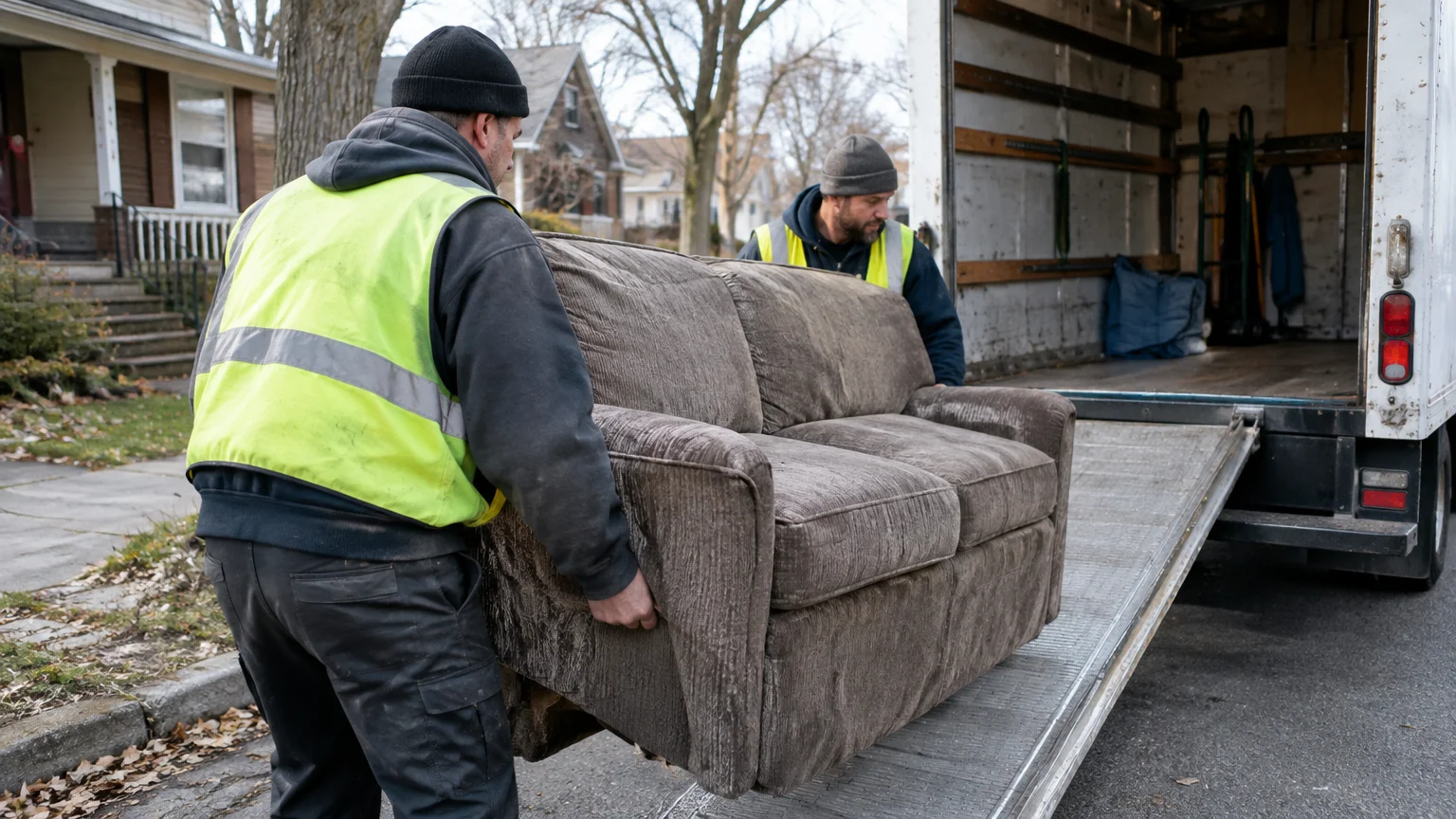
Professional couch removal usually starts with a review of the furniture and its route out. The crew then protects the property, moves the couch, loads it, and takes it to an approved reuse, recycling, or disposal outlet.
How Pickup and Hauling Typically Work
Tell the crew what needs to go and point out access concerns. The crew checks for hidden items, loose parts, and safe lifting points. If the plan changes, you should receive an updated quote before work continues.
The couch is moved through the planned route and loaded into a suitable vehicle. Usable items may go to reuse when accepted. Damaged furniture may go to disposal or material recovery based on local options.
Remove personal items before the crew arrives. Keep children and pets away from the work area during the pickup.
How Crews Protect Floors, Walls, and Doorways
Crews may use moving blankets, straps, dollies, corner guards, and careful lifting methods. They should watch doors, trim, railings, light fixtures, and walls.
You can help by clearing the route and pointing out fragile surfaces. Mention elevators, locked gates, narrow parking areas, and building rules before pickup.
A careful crew does not force a couch through a tight space. If it cannot fit safely, the crew should explain the next option.
How Should Businesses Handle Old Couches and Office Furniture?
Businesses should plan couch removal around customers, workers, tenants, and building rules. A clear plan limits delays and keeps the work area safe.
Removing Sofas From Offices, Rentals, and Commercial Spaces

Office sofas may be in reception areas, break rooms, waiting rooms, or shared lounges. Rental properties may contain couches left by tenants or damaged during a move. Each place may have different access and timing needs.
Managers should check for personal items, keys, papers, and electronics. Ask building management about loading zones, elevators, insurance rules, and approved work hours.
Businesses may have several items. A removal plan can include chairs, tables, desks, mattresses, and other furniture. Grouping the work into one visit may simplify scheduling, but list every item clearly.
Planning Removal Around Tenants, Customers, or Employees
Schedule the work when fewer people use the space. Place signs near the work zone and keep walkways open. In a shared building, tell tenants and staff about noise, access, and timing.
A manager should meet the crew and confirm the items. That person can provide keys, unlock doors, and answer building questions. Photos sent before the visit may reduce delays.
Yakima WA Junk Removal serves homes and businesses around Yakima, including Downtown Yakima, Terrace Heights, Union Gap, Selah, Wapato, Moxee, and nearby communities. Clear scheduling can help property owners remove furniture while normal work continues.
What Is the Best Way to Get Rid of an Old Couch?
The best method depends on condition, access, timing, and local rules. Reuse is a good choice for a clean couch. Recycling or bulk collection may work for some damaged items. Professional removal is often safest when the couch is heavy or hard to reach.
A Practical Couch Disposal Checklist
Use this checklist before choosing a disposal method:
- Inspect the fabric, frame, cushions, and hidden areas.
- Measure the couch and every part of the removal route.
- Remove personal items and clear doors, halls, and stairs.
- Ask charities, buyers, and recycling sites about acceptance rules.
- Check local bulk-pickup rules before placing anything outside.
- Share photos and access details when arranging furniture removal.
Do not move a couch alone when it is heavy, unstable, or near stairs. Do not place damaged furniture outside without checking collection rules. A careful plan lowers injury risk and helps prevent a rejected pickup.
When to Contact a Local Furniture Removal Service
A local service may help when donation is not available, recycling rules are unclear, or the couch cannot be moved safely. It may also help with couch and mattress removal, office furniture, and other bulky items during cleanouts.
Yakima WA Junk Removal can help property owners review the removal plan and choose a practical next step. Contact us to arrange old couch removal with a clear plan for access and handling.
Frequently Asked Questions
Can an old couch go in a dumpster?
A couch may not fit safely in a small dumpster. Many waste providers also have special rules for upholstered furniture. Ask the provider before placing it inside. A bulk program, recycling site, donation group, or removal crew may work better.
How do people get rid of a couch and mattress together?
Couch and mattress removal can often be planned as one pickup. List both items before scheduling. Mattresses may have separate rules because of their size and materials. Tell the crew about stairs, elevators, tight doors, and access issues.
Can a wet or stained couch be donated?
Most donation groups want clean furniture that another person can safely use. A wet, moldy, pest-damaged, or badly stained couch may be refused. Ask the group first, then choose recycling or professional removal if reuse is not suitable.
What happens to an old couch after removal?
The next step depends on its condition and local facilities. A usable couch may go to reuse. Parts may be separated for material recovery. Badly damaged furniture may go to an approved disposal site. Ask the service how items are handled.
Do homeowners need professional help to remove a couch?
No. A light couch may be moved by capable adults when the route is clear and level. Professional help makes more sense for sleepers, sectionals, stairs, tight turns, injuries, or limited help. No one should risk a back injury or property damage.
Key Takeaways
- Inspect the couch before choosing donation, resale, recycling, bulk pickup, or hauling.
- Measure doors, halls, stairs, elevators, and turns before moving furniture.
- Confirm local rules before leaving upholstered furniture at the curb.
- Never lift a heavy or unstable couch alone.
- Share access details so the quote and removal plan are accurate.
Conclusion
Learning how to get rid of an old couch starts with an honest condition check and a safe removal plan. A clean couch may be reused, while a damaged or oversized one may need recycling, bulk collection, or professional hauling. Careful measurements and local rule checks prevent many problems.
For homeowners, landlords, offices, and property managers, the right choice saves time and lowers the risk of damage. Yakima WA Junk Removal helps Yakima residents handle bulky furniture with a clear, practical process.
If you are not sure what you are dealing with, it is worth having someone look at it before it turns into a bigger job. Get in touch with Yakima WA Junk Removal today and we will tell you where you stand.