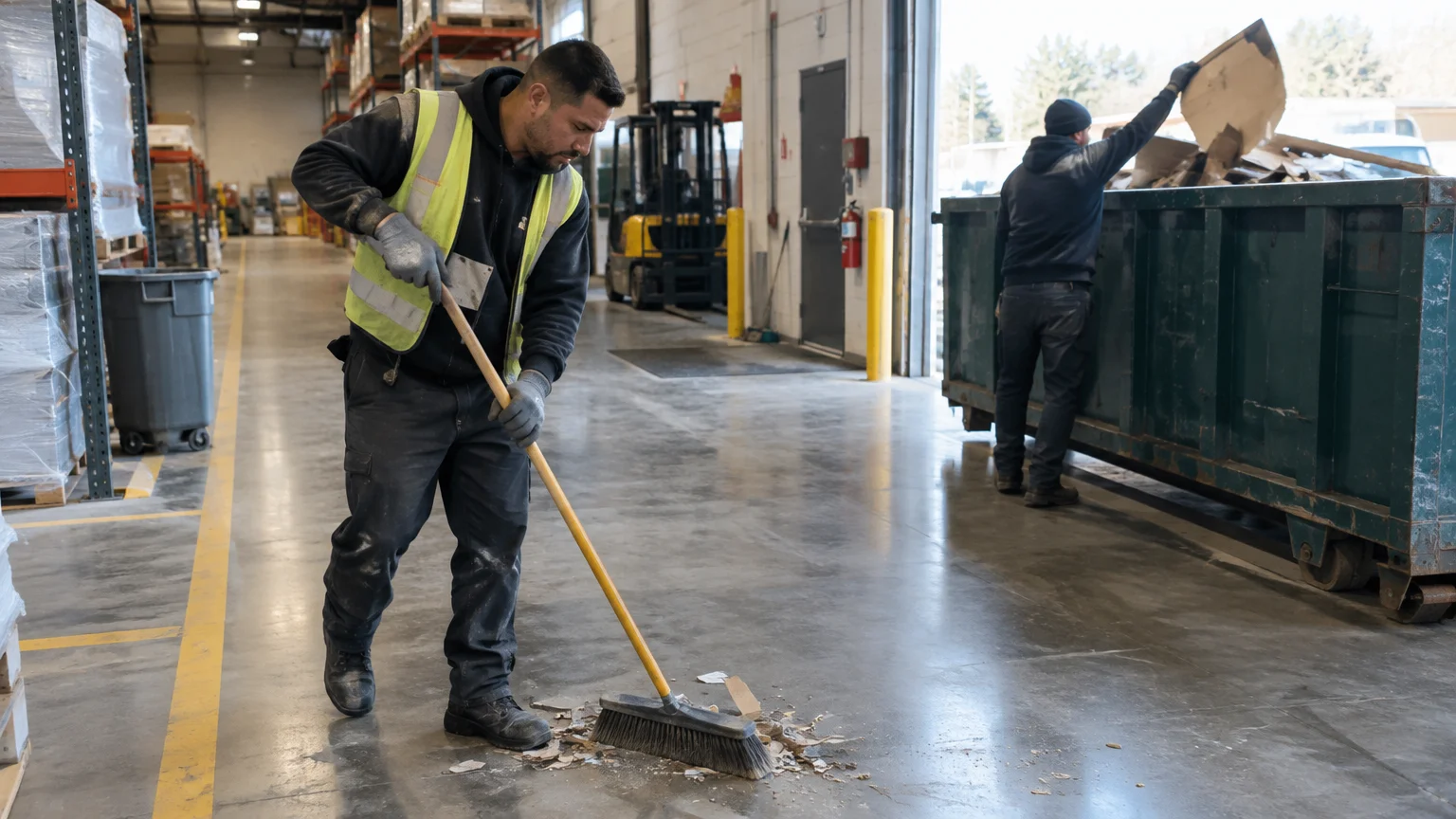
Warehouse cleanup vs dumpster rental comes down to labor, materials, safety, space, and time. Full-service hauling helps when a business needs sorting, lifting, loading, hauling, and sweeping done by a crew. A dumpster may fit a planned project when staff can load items safely and follow disposal rules.
Table of Contents
- What Is the Difference Between Warehouse Cleanup and Dumpster Rental?
- Which Option Is More Efficient for a Warehouse Cleanup?
- How Do Warehouse Cleanup Costs Compare With Dumpster Rental?
- What Types of Warehouse Materials Can Each Option Handle?
- Which Choice Is Safer for Employees and Warehouse Operations?
- When Should a Business Choose Warehouse Cleanup Services?
- Warehouse Cleanup vs Dumpster Rental: How Do You Decide?
- Frequently Asked Questions
- Key Takeaways
- Conclusion
What Is the Difference Between Warehouse Cleanup and Dumpster Rental?
Warehouse cleanup services include the labor needed to remove unwanted items. A crew may sort, lift, carry, load, haul, and sweep the work area. This can help when a warehouse contains mixed junk, heavy equipment, old fixtures, and loose debris.
Dumpster rental usually means a container is brought to the property. The business fills it during an agreed rental period. Staff or hired workers must move waste to the container and keep banned items out of it.
How warehouse cleanup services typically work
A commercial junk removal crew starts by looking at the materials and access points. The team may identify pallets, shelving, office furniture, appliances, boxes, and building debris. Items are then carried out, loaded, and taken for disposal or recycling when accepted.
Yakima WA Junk Removal helps Yakima property owners compare the work involved. The best plan depends on the building layout, loading space, item weight, and deadline. Clear job details can also help prevent delays on cleanup day.
How dumpster rental works for commercial properties
A dumpster may work well when waste is already gathered near a clear loading area. It can suit a planned renovation or a steady cleanup where employees have time to load it. The business must still plan for placement, truck access, weight limits, and local disposal rules.
The site also needs enough room around the container. Staff must be able to carry items without blocking doors, walkways, or work areas. These tasks can take more time than the container rental itself suggests.
Which Option Is More Efficient for a Warehouse Cleanup?
Professional hauling is often more efficient when a warehouse has mixed materials or a short deadline. The business does not need to assign employees to carry heavy items, take apart shelving, or make repeated trips. A crew can focus on removal while normal work continues.
When professional hauling saves time and labor
A full-service crew can handle jobs that a dumpster does not cover. These may include moving items from upper storage areas, taking apart large fixtures, and clearing several rooms. This can help during a lease change, property sale, relocation, or urgent warehouse reset.
Professional help may also reduce planning work. A business does not need to create a loading team or find separate help for large items. Commercial Junk Removal may support offices, warehouses, stores, and other business properties with one planned visit.
This option can also help when workers have other duties. Time spent loading a dumpster is time away from orders, customers, repairs, or daily office work. A removal crew handles that physical work instead.
When a dumpster fits an organized cleanup project
A dumpster may be practical when a business has its own staff and one simple waste stream. It can fit a project where most items are sorted and easy to carry. The property also needs enough space for delivery and safe movement around the container.
The business should think about how long loading will take. A container that stays on site may help with a phased project. It may be less useful when the warehouse must reopen soon or when employees cannot spare work hours for hauling.
A dumpster also places more planning duties on the business. Someone must watch the fill level, keep items inside the container, and make sure restricted materials stay out. Staff must also clean the area after loading is done.
How Do Warehouse Cleanup Costs Compare With Dumpster Rental?
Costs vary because every warehouse has different materials, access needs, labor demands, and disposal rules. Professional warehouse cleanup often reflects the amount and type of material removed, along with the work needed to load it. Dumpster rental may include container size, rental time, delivery, pickup, and disposal terms.
What affects the cost of professional warehouse cleanup
A crew may review the total volume, weight, item type, stairs, distance from the truck, and loading conditions. Dense items can take more work than light cardboard or packaging. Shelving, machinery, appliances, and building debris may also need different removal plans.
Businesses should describe the job clearly when requesting service. Photos, access notes, loading dock details, and a list of large items can help the provider understand the work. The actual price depends on the job and is confirmed when the business gets in touch.
Labor is an important part of the comparison. A dumpster may seem simple, but employees still need to sort, carry, load, and sweep. A business should compare the full work plan instead of looking only at the container.
What affects dumpster rental pricing
Dumpster pricing can change with container size, rental time, local rules, and material type. Extra charges may apply under the rental agreement for excess weight, banned items, or added days. The business should read the terms before placing a container on site.
The container may also need a permit or approval in some locations. Placement can affect deliveries, parking, loading docks, and nearby properties. These needs should be checked before the rental begins.
A business should compare both the rental cost and the labor cost. It should also consider lost work time, equipment needs, cleanup time, and the risk of loading mistakes. That fuller view makes the choice easier.
What Types of Warehouse Materials Can Each Option Handle?
Both options can handle common warehouse waste, but acceptance rules differ. Pallets, cardboard, broken shelving, fixtures, and loose debris may be accepted when prepared correctly. Businesses should confirm special items before work begins.
Pallets, shelving, equipment, and bulk debris
A professional crew may remove wooden pallets, metal racks, display fixtures, desks, chairs, and outdated equipment. Construction Debris Removal may help when a warehouse project leaves drywall, wood, flooring, or other building waste. Large items may need to be taken apart before loading.
A dumpster may handle similar materials if the rental agreement allows them. Staff may need to break down boxes, flatten materials, and keep heavy waste within the container's limits. Items should not block doors, fire paths, loading lanes, or emergency equipment.
Some materials take more space than expected. Large racks, tables, and fixtures can fill a container quickly. A crew may be better suited when the waste includes many bulky items.
Items that may require special handling or disposal
Some materials should not go into a standard dumpster. Paint, chemicals, fuel, batteries, refrigerants, electronics, and certain appliances may follow special rules. A refrigerator or freezer may contain refrigerant, so businesses should ask who can remove and manage it properly.
Old mattresses, tree branches, and yard waste may also have separate disposal options in Yakima and nearby communities. A local provider can explain what it accepts and what needs another solution. Businesses should never mix unknown liquids or hazardous products with common warehouse waste.
The business should make a separate list for unusual items. This includes liquids, electronics, appliances, batteries, and anything marked as hazardous. Sharing that list early can help avoid delays or rejected loads.
Which Choice Is Safer for Employees and Warehouse Operations?
Professional cleanup can reduce employee lifting and loading duties. This may lower exposure to sharp edges, unstable stacks, blocked walkways, and heavy objects. A dumpster can also be safe when the site has trained staff, clear rules, and proper equipment.
Reducing lifting, loading, and workplace hazards
Warehouse managers should keep people away from unsafe piles and damaged racks. Workers should not climb into containers or lift items beyond their training. Heavy or awkward objects may need carts, dollies, lifting equipment, or a trained removal crew.
A clean work zone also helps protect normal operations. Clear aisles make it easier for staff and equipment to move. Businesses should separate active work areas from cleanup zones and keep doors, exits, and fire equipment open.
The safest choice depends on the people doing the work. If staff lack the right tools or training, a dumpster does not solve the lifting problem. Full-service hauling may reduce those risks by handling the physical removal.
Managing traffic, access, and cleanup interruptions
Container placement needs careful planning. A dumpster should not block delivery lanes, customer parking, emergency access, or neighboring property. The site should also account for trucks, forklifts, pedestrians, and changing weather.
A professional crew may complete removal in one focused visit, which can limit disruption. Yakima WA Junk Removal can help businesses plan around loading docks, access gates, and operating hours. The goal is a cleaner site without creating a new traffic or safety issue.
Businesses should set a clear cleanup zone before work starts. They should mark items that stay and keep workers away from the removal path. Good planning helps protect both the cleanup team and daily operations.
When Should a Business Choose Warehouse Cleanup Services?
A business should consider warehouse cleanup services when the project includes heavy lifting, mixed materials, tight deadlines, or limited staff time. Professional help may also fit a vacant building, property turnover, or large commercial cleanout. It is useful when one team needs to manage removal from start to finish.
Situations that favor professional junk removal
Professional hauling may be a strong fit when:
- The warehouse contains large, heavy, or awkward items.
- The business needs the space cleared by a set date.
- Staff cannot safely lift, sort, or load the material.
- The waste includes several item types with different handling needs.
- The property has limited room for a container.
- The cleanup follows a move, closure, renovation, or lease change.
An office cleanout may be added when warehouse and office areas are being cleared together. Estate Cleanout is a different service for household property and personal belongings. Commercial work focuses on business sites and operating needs.
Professional help may also suit a property manager with several spaces to clear. One planned removal can make scheduling easier. It can also help keep a turnover or renovation on track.
Questions to ask before scheduling commercial hauling
A business should ask what items the provider accepts and how the crew handles restricted materials. It should also confirm access needs, preparation steps, timing, and whether the team removes items from inside the building. Clear answers help the property manager prepare the site.
The business should share photos and note stairs, elevators, narrow doors, loading docks, and security rules. This makes planning easier and helps the provider decide whether special tools or extra coordination are needed.
It is also helpful to ask how the work area should be prepared. The business can then move important records, mark items that stay, and arrange access before the crew arrives. These small steps can help the visit run smoothly.
Warehouse Cleanup vs Dumpster Rental: How Do You Decide?
The best choice depends on who will do the labor, how quickly the space must be cleared, and what the waste contains. A dumpster may suit a simple project with prepared materials and available staff. Professional cleanup may suit a mixed, heavy, or time-sensitive warehouse job.
A practical decision checklist for business owners
Business owners can compare these points before making a plan:
- List every material that must leave the property.
- Mark heavy, sharp, electrical, liquid, or restricted items.
- Measure the work area and check truck or container access.
- Decide whether employees can load items safely.
- Set the required completion date and work-hour limits.
- Compare the full labor plan with the removal service plan.
This process helps reveal hidden work. A project may look small until staff must move items across the building, break down racks, or sort mixed debris. A clear list also supports better talks with the chosen provider.
Planning the next step for a warehouse clearance
The business should prepare a safe path, identify items that stay, and remove private documents before the crew arrives. It should also share security checks, dock rules, parking limits, and restricted areas. These details can make the visit smoother.
For businesses in Yakima and the wider main Yakima area, local knowledge may help with access and disposal planning. This includes Downtown Yakima, Terrace Heights, Union Gap, Selah, Wapato, Moxee, and nearby communities. A short site review can show whether full-service hauling or a container plan better fits the property.
The final choice should protect staff time, safety, and the business schedule. If the work is simple and staff are ready, a dumpster may be enough. If the job is heavy, mixed, or urgent, a cleanup crew may be the better fit.
Frequently Asked Questions
What is a warehouse cleanout service?
A warehouse cleanout service removes unwanted items from a commercial property. The work may include sorting, lifting, carrying, loading, hauling, and sweeping. It can cover pallets, shelving, furniture, equipment, packaging, and approved debris. The provider should explain which materials it accepts before the visit.
Is a dumpster better for a small warehouse project?
A dumpster may fit a small project when waste is sorted, easy to load, and placed near the container. The business still needs safe labor, enough time, and clear access. If staff cannot handle heavy or mixed items, professional hauling may be a better choice.
Who takes old freezers from a warehouse?
A commercial junk removal provider may accept old freezers, but the business should ask first. Freezers can contain refrigerant and electrical parts that need special handling. The provider should explain whether it manages those materials or whether another approved service is needed.
Where can a business take tree branches or yard waste?
Businesses should check local transfer stations, compost sites, or municipal programs for accepted yard waste. Rules can differ by community and material type. A local hauling provider may also explain available options, but branches should not be mixed with restricted warehouse waste without confirmation.
How should a business prepare for commercial junk hauling?
The business should separate items that must stay, clear safe paths, unlock needed areas, and share access rules. It should identify liquids, chemicals, appliances, electronics, and other special materials. Photos and a written item list can help the provider plan the removal properly.
Key Takeaways
- Professional hauling includes labor that a dumpster rental does not provide.
- A dumpster can suit a planned project with safe staff loading.
- Mixed, heavy, or restricted materials need careful handling.
- Access, deadlines, labor, and disposal rules affect the best choice.
- A clear item list helps businesses plan warehouse removal.
Conclusion
Warehouse cleanup vs dumpster rental is a choice about labor, safety, access, materials, and time. A dumpster may work for an organized project with staff who can load it safely. Professional warehouse cleanup may be better when the site has heavy items, mixed debris, limited space, or a firm deadline.
Yakima WA Junk Removal helps businesses and property owners plan practical removals. Contact us to discuss the warehouse clearance and choose a plan that fits the property.