Junk pick up helps businesses clear office furniture, cubicles, equipment, and other unwanted items. A clear plan tells staff what should stay and what can go. It also helps the removal team understand the items, building access, and timing. Yakima WA Junk Removal can help Yakima businesses plan an office cleanout around daily work.
Table of Contents
- What does commercial junk pick up include?
- When should a business arrange office junk pick up?
- How should you prepare an office for junk pick up?
- How are office electronics and confidential materials handled?
- What affects the time and effort required for commercial junk pick up?
- How can businesses reduce disruption during an office cleanout?
- How can you choose a commercial junk removal provider?
- Frequently Asked Questions
What does commercial junk pick up include?
Commercial junk pick up may include desks, chairs, cubicles, shelves, and other office items. The exact items depend on the provider and the materials involved. Before booking, describe what needs to go. Be sure to mention large, heavy, or unusual items so the team can plan for them.
Office furniture, cubicles, and fixtures
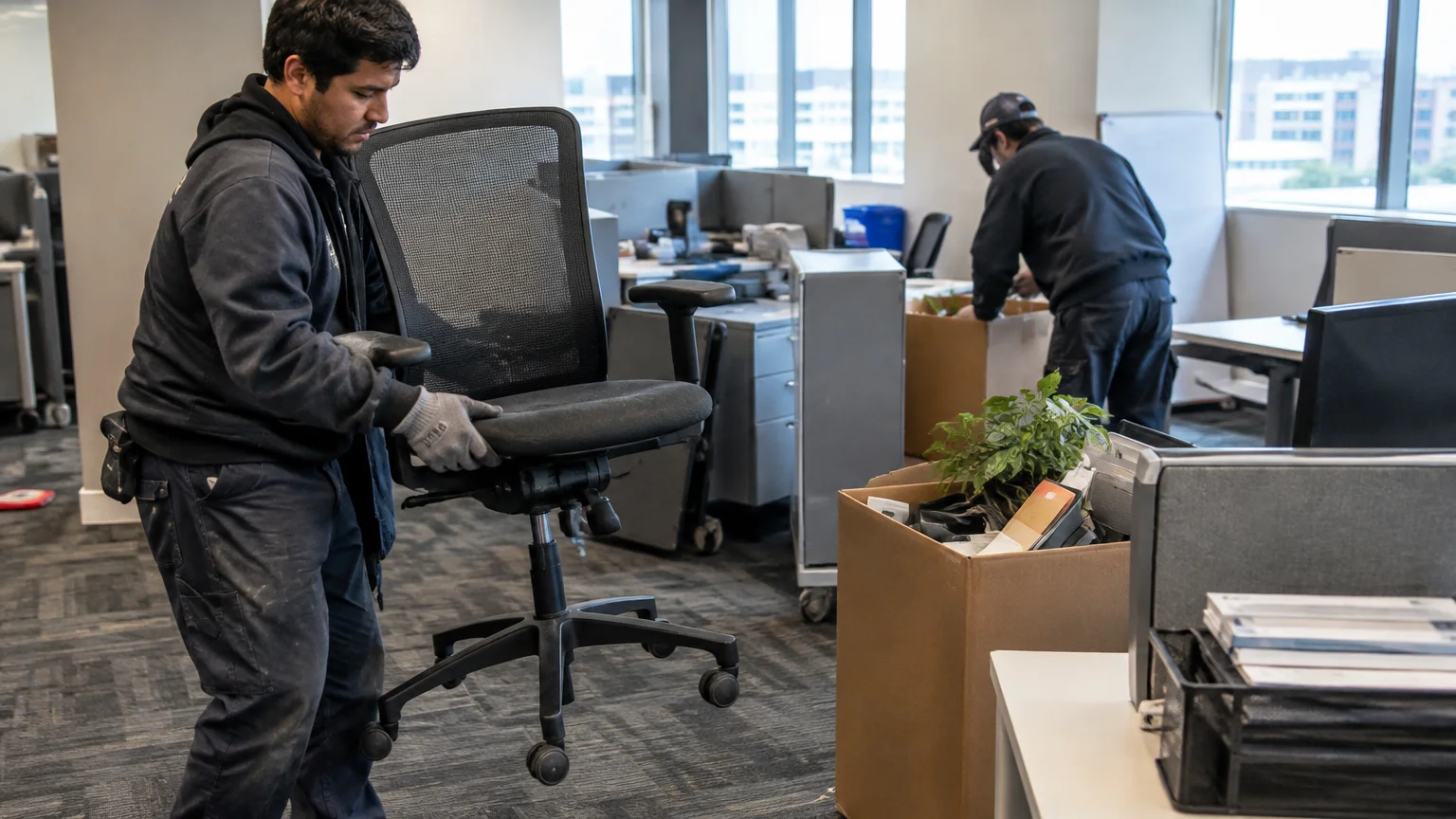
Office cleanouts often include desks, file cabinets, meeting tables, chairs, and cubicle parts. A cleanout may also cover shelves, reception furniture, break room tables, and standing fixtures. A cubicle is a small work area made with movable panels. Some cubicle parts may need to come apart before they can be moved.
Large furniture can be hard to move through narrow doors or busy halls. Staff should not carry heavy items unless they have the right training and tools. The removal team can review the item list and building access before work starts. Point out any desks or other pieces that your business plans to keep.
Electronics and general business waste
An office cleanout may include computers, printers, screens, cords, and other equipment. It may also include boxes, damaged chairs, and supplies the business no longer needs. Providers do not all accept the same items. Ask what the team can collect and how it handles each type of item.
Some things need separate care. These may include electronics, batteries, or items that hold private information. Sorting them ahead of time helps the team know what is ready to go. Yakima WA Junk Removal can discuss which items fit the planned service for businesses. A clear list can also help avoid mix-ups on removal day.
When should a business arrange office junk pick up?
Arrange office junk pick up when unwanted items take up useful space or the business is changing. Common times include a move, a remodel, an office closure, or new equipment arriving. Planning early gives staff time to sort items and check building rules.
Moving, renovating, or closing an office
In Yakima, an office move is a good time to review furniture and equipment. Decide what should move, what may be reused, and what needs to be removed. During a remodel, clearing the work area can help workers reach the rooms they need. A closed office may need a cleanout that covers several rooms.
The person planning the work should check the move date, lease terms, and building rules. Some properties ask for a loading dock booking or set hours for moving large items. A property manager may also need to approve how items leave the site. Checking these details early can help prevent delays.
Clearing equipment and unwanted furniture
A cleanout can help even when there is no move or remodel. Broken chairs, unused desks, and old equipment can fill work areas and storage rooms. Removing items the business no longer uses can make room for current work.
Start by reviewing one room at a time. Staff can mark what stays, what should be picked up, and what needs a closer look. For example, a team may keep file cabinets but remove damaged desks and extra chairs. Sorting first helps protect items that employees still need.
How should you prepare an office for junk pick up?
Prepare the office by sorting items, sharing clear directions, and checking access before removal day. Staff should know what is leaving and what must stay. A short plan helps the removal team work safely and reduces confusion in shared areas.
Identify items for removal and items to keep
Walk through the office with someone who knows how each room is used. Mark items for removal with signs or a shared list. Keep items that must stay away from the collection area. If no one knows whether an item should go, ask before moving it.
A simple checklist can help the team get ready:
- List the rooms and items included in the cleanout.
- Mark furniture and equipment that must stay.
- Set aside items that need special care or review.
- Tell staff when and where items should be ready.
Check desk tops, drawers, and cabinets before the team arrives. Papers, personal items, and office supplies can be left behind if no one looks. Choose one staff member to answer questions during the work. This can help the team get clear answers when an item’s status is not certain.
Plan access, timing, and staff communication
Check the path from each room to the exit. Note stairs, elevators, narrow doors, loading areas, and other limits. Tell the provider about these details when you discuss the job. Building rules may affect which entrance the team can use and when items can be loaded.
Give staff a short notice about the cleanout plan. Explain which areas will be cleared and how employees should protect work items. If people will be working nearby, plan a route away from busy desks and shared areas. Clear directions help staff know what to expect and keep daily work on track.
How are office electronics and confidential materials handled?
Sort office electronics and confidential materials before they leave the building. Ask how the provider handles electronics, and make sure private records are removed first. The right steps depend on the item, its condition, and the provider’s services.
Separate electronics for appropriate recycling or disposal
Set aside computers, monitors, printers, and related equipment so the team can identify them. Do not assume every junk removal provider takes every type of electronic item. Ask what the team accepts and whether certain items need a separate recycling or disposal route.
Before equipment leaves, the business’s IT staff should follow its rules for company devices and data. This may mean removing storage devices, signing out of accounts, or wiping data. A data wipe clears information saved on a device. Only someone allowed to manage company equipment should do this work.
Batteries and other parts may also need separate handling. Keep them apart from furniture until the provider confirms what it accepts. If you are unsure about an item, do not put it with ordinary office waste. An item list and early questions can help avoid rushed choices on removal day.
Protect records and sensitive business information
Check desks, file cabinets, and storage areas for paper records before furniture is removed. Private information may include customer details, staff records, and business papers. Follow the company’s rules for keeping and destroying records before furniture or boxes leave the office.
Take papers out of drawers and check shelves, boxes, and shared work areas. Do not ask the removal team to decide which records can be thrown away. The business must identify private materials and arrange safe handling when needed. Giving one staff member this task can help prevent important papers from being lost.
What affects the time and effort required for commercial junk pick up?
The amount of work depends on how many items there are, what they are, and how easy they are to reach. Building rules can also affect the work. Clearing a few chairs is different from clearing an office full of desks and cubicles. Share clear details so the provider can plan.
Volume, item types, and loading access
Large or heavy items may need more people or careful movement. Cubicle panels may need to be taken apart, while loose boxes may be easier to carry. The number of rooms and the distance to a loading area also shape the work plan.
Building access matters. Stairs, small elevators, tight turns, and long halls can slow the move. A reserved loading area may help, while a busy entrance may need more planning. Photos or a written list can help explain the site. The provider may still need to check details before work begins.
Building rules, scheduling, and coordination
Office buildings may have rules about service doors, elevator use, noise, and loading. The business or property manager should check these rules before choosing a time. Some buildings may also ask for proof of insurance or a plan to protect shared areas.
The best time depends on staff needs and building access. A quiet work period may be easier than a busy one. The person in charge should work with building staff, employees, and the removal provider. A shared plan can help avoid delays caused by unclear access or item lists.
How can businesses reduce disruption during an office cleanout?
Businesses can limit disruption by planning the route, timing, and work areas before the cleanout. Tell employees what is happening and move daily work away from the removal path. Clear directions help the team work without blocking shared areas longer than needed.
Coordinate removal around business operations
Choose a time that fits both the building rules and the work schedule. Tell employees which rooms or halls may be affected. If the office stays open, keep a clear path between work areas and exits. Staff should not move items into the route while furniture is being carried.
Choose one staff contact to answer questions and confirm which items should leave. This person should have the item list and know what must stay. If work is near a customer or visitor area, direct people to another entrance or waiting space. Simple steps can help keep the office calm and organized.
Keep shared areas and exit routes clear
Keep hallways, stairs, and exits open. Do not stack unwanted furniture where it may block people or cause someone to trip. Put items only in an approved area, away from things that must stay.
Before the team arrives, check the route for cords, boxes, and other obstacles. Tell staff not to use the removal area for temporary storage. Once items are gone, check the rooms and shared spaces for anything left behind. These steps help protect staff and visitors and keep the cleanout moving.
How can you choose a commercial junk removal provider?
Choose a commercial junk removal provider by checking which items it accepts, how it handles special materials, and whether it can work with the building schedule. Ask clear questions before work begins. The plan should fit the office, the item list, and the site rules.
Confirm service scope, handling practices, and scheduling
Describe the rooms, furniture, electronics, and other items involved. Ask if the provider can handle cubicles, large furniture, or items needing separate care. Confirm how the team will enter the building and whether you need to arrange elevator or loading access.
Ask what happens to collected items. Some may be suitable for reuse or recycling, while others may need disposal. The next step depends on the item and the provider. Do not assume every item will be handled the same way. Clear answers help everyone know what to expect before the cleanout starts.
Key takeaways for planning an office cleanout
- Make a clear list of items to remove and items to keep.
- Check building rules, access routes, and loading instructions early.
- Set aside electronics and private records for review.
- Tell staff which areas will be cleared and when.
- Confirm what the provider accepts and how it handles items.
A well-planned office cleanout starts with clear choices and good communication. Review furniture, equipment, and records before removal day. Check building access and keep shared routes open. Yakima WA Junk Removal can help businesses plan a cleanout that fits their needs.
Conclusion
Junk pick up can help a business clear space during a move, remodel, closure, or office reset. Sorting items, checking access, and asking about handling can make the job easier to manage. Contact us to discuss an office cleanout with Yakima WA Junk Removal.
Frequently Asked Questions
How can a business get rid of old office furniture?
First, sort furniture into items to keep, reuse, or remove. Check building rules and ask which pieces a removal provider accepts. Empty desks and cabinets before they go. Large items may need a clear path to the loading area.
How should a company clear out a closed or foreclosed property?
First, confirm who can make decisions about the property and its contents. Make a list, set aside private papers or personal items, and check access rules. A commercial removal provider can review the items and explain what it can collect.
How can a business get rid of a refrigerator?
Ask a removal provider if it accepts refrigerators and how it handles them. Follow the building rules and prepare the appliance as directed. Do not leave it in a hall or loading area without approval. Special handling may depend on the appliance and local rules.
How do companies handle large office cleanouts?
Companies often start by reviewing the site, item list, and access needs. They may plan the work one room or area at a time, then move items along an agreed route. Businesses can help by labeling items, protecting records, and choosing one staff contact.
Can broken office furniture be removed with other junk?
Broken furniture may be included, but the provider should confirm what it accepts. Describe the item and its condition before the work is planned. Keep damaged pieces out of busy walkways. Do not try to move heavy or unstable furniture without proper help.
If you are not sure what you are dealing with, it is worth having someone look at it before it turns into a bigger job. Get in touch with Yakima WA Junk Removal today and we will tell you where you stand.