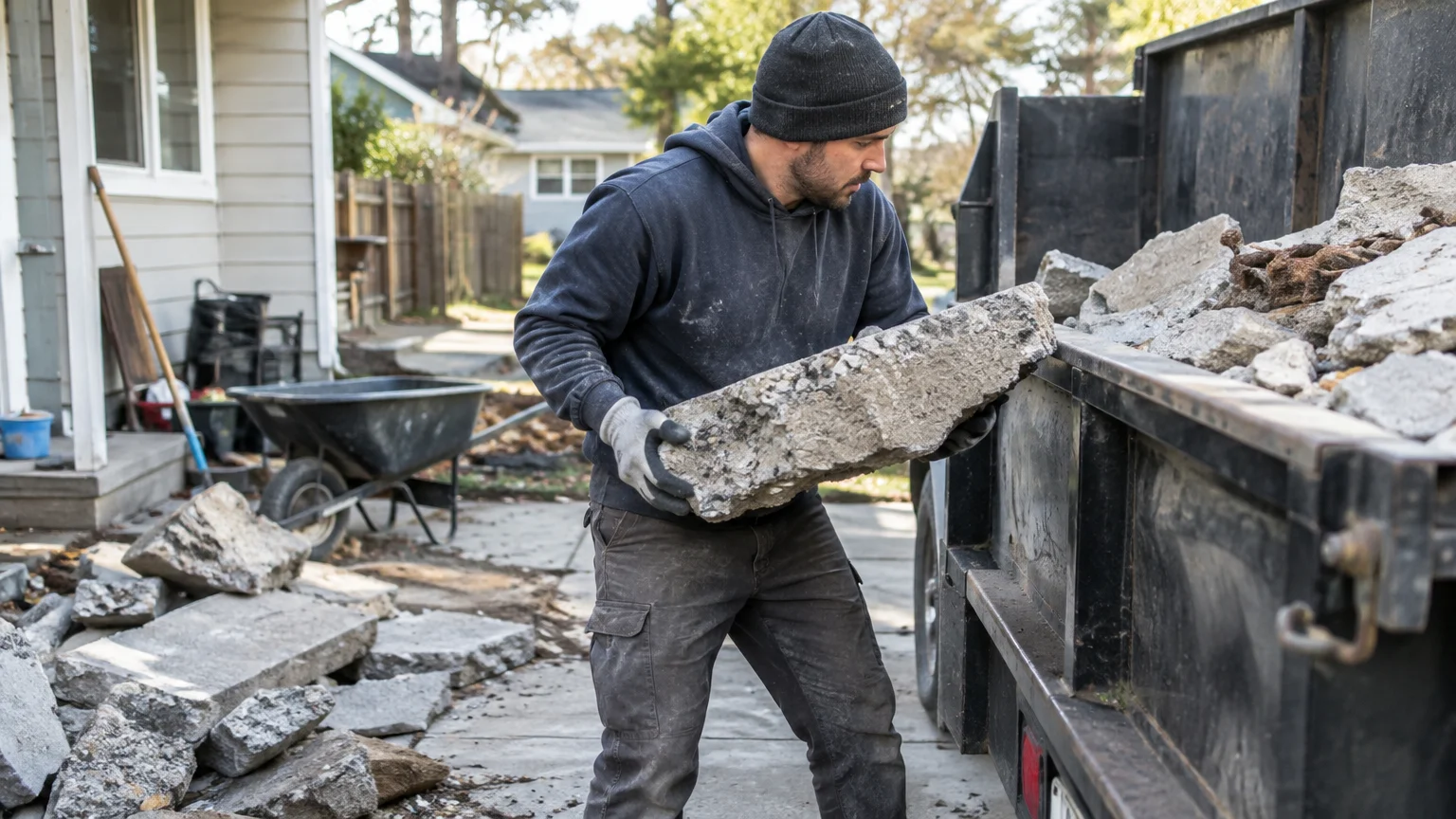
Concrete disposal FAQs help contractors and property owners plan a cleanup and understand what affects the job. Concrete disposal means moving broken concrete to a place that can reuse or manage it. The amount, weight, material mix, and access all shape the removal plan. Clean concrete may be recycled if a local facility accepts it.
How much does concrete disposal cost?
Concrete removal costs depend on the amount of debris, how easy it is to reach, and where it can go. A small pile in an open driveway is often simpler to remove than a large pile mixed with other waste. The final cost is confirmed on a quote after the job details are reviewed.
What factors affect the cost of removing concrete?
The amount and weight of the concrete are important. So are the pile’s location and the distance from the pile to the truck. Steps, narrow paths, and other access limits can make removal harder. Concrete in a clear driveway may be easier to move than pieces spread around a work site. Large slabs may also need to be broken into smaller pieces before pickup.
The condition of the material can affect the plan, too. Clean concrete may have different disposal options from concrete mixed with soil, wood, drywall, or metal. Local rules and the receiving facility’s requirements matter as well. Contractors can share photos and explain where the pile is so Yakima WA Junk Removal can learn about the job before pickup.
How does concrete disposal compare with other construction debris removal?
Concrete is dense and heavy, so it can take more work to move than many light renovation materials. Drywall, wood scraps, and packaging may be easier to carry, but mixed loads may still need sorting. The best plan depends on the kind and amount of debris, not only how large the pile looks.
A cleanup may include other items along with concrete. Check which materials can go in the same load before setting them out. Furniture removal and disposal or appliance removal and disposal may need a different plan from job-site rubble. A fridge, for example, should not be handled like broken concrete. Do not assume every item can go in one pile or to the same facility.
Can broken concrete be recycled?
Broken concrete may be recycled if a local facility accepts it and it is free of unwanted materials. Options vary by area and by the condition of the concrete. A hauler or facility can check where a specific load may go.
How is concrete processed for reuse?
At a recycling facility, workers may sort and crush concrete into smaller pieces. The crushed material can be used for some building and landscaping work, such as a base beneath new paving. The facility decides what it accepts and how it handles each load.
Clean material is easier to check. Concrete with little or no wood, insulation, plastic, or soil attached may have more reuse options than a mixed pile. Bricks and asphalt may also need separate handling, based on the site’s rules. Tell the hauler what is in the pile before pickup so they can check the right disposal path.
For projects Yakima WA Junk Removal can help explain what details to share about the debris and pickup spot. The receiving facility still sets its own rules. Those rules can vary, so check them before mixing concrete with other renovation waste.
What can prevent concrete from being accepted for recycling?
A facility may refuse a load if it has materials that are not allowed or is too mixed to sort. Soil, trash, drywall, wood, and metal can affect whether the load is accepted. Painted or treated pieces may need extra review, so describe them instead of guessing.
Keep other waste in a separate pile when you can. Do not mix in household junk just because it is nearby. If the cleanup includes old furniture or appliances, ask about those items separately. For example, someone asking how to get rid of a fridge should check its handling needs instead of placing it with concrete chunks.
How do you prepare concrete for pickup?
Put concrete in a clear, easy-to-reach spot and keep it apart from other debris when possible. Tell the hauler what is in the pile and note any access limits. These steps can help prevent delays and make pickup safer for people at the site.
What materials and debris can be included?
Accepted materials depend on the service and the facility receiving the load. Broken concrete, bricks, and asphalt may be accepted, but name each material when arranging the job. Drywall, lumber, tile, and other renovation debris may also be handled, though they may need to stay apart from heavy rubble.
Before pickup, make a short list of the materials in the cleanup. Mention sharp pieces, large slabs, and anything mixed into the pile. If a property cleanout includes furniture, ask about furniture removal and disposal as a separate item. Office furniture removal and disposal may also need different handling from construction waste.
Some household items are not construction debris. If the project includes a broken chair or old couch, ask how to get rid of old furniture instead of adding it to the rubble pile without checking. The same goes for appliances. Confirm what is accepted before setting out items.
How can you make heavy debris easier and safer to remove?
Homeowners can safely clear a path, move light loose debris, and keep people away from the work area. They do not need a professional for these simple tasks. But breaking large slabs, lifting very heavy pieces, or moving debris near weak walls can cause injury or damage. Leave those jobs to trained workers with the right tools.
Keep the pickup path clear of cords, tools, and loose materials. Do not stack concrete where it could fall or block an exit. If debris is in a garage, yard, or behind a building, explain the route and any gate or stair access. A clear description helps the crew plan how to reach the pile.
How quickly can concrete be picked up?
Pickup timing depends on crew availability, the amount of debris, site access, and where the load can go. A clear pile that is ready to reach may be easier to schedule than debris that still needs sorting or breaking. Ask about timing when arranging service, especially if the project has a firm cleanup date.
What affects pickup timing and access at a job site?
A truck needs a safe place to park and a clear route to the concrete. Narrow drives, locked gates, stairs, active work zones, and blocked paths can affect access. Weather and other site conditions may also change how safely the crew can work.
Tell the hauler if pickup is at a business, a remodel, or a shared site. Contractors should share site rules, entry steps, and timing limits. Property owners can point out the pile and keep pets and bystanders away from the work area. These details help everyone plan the visit.
What should contractors and property owners confirm before scheduling?
Confirm the material list, pile location, access route, and the day the area needs to be clear. Ask whether concrete, bricks, asphalt, and other debris can go together. Also check whether the pile should be separated or moved to a certain spot before the crew arrives.
Share photos if useful, and be clear about large pieces or mixed waste. Do not assume a facility will accept a material until that has been checked. These steps help contractors, remodelers, and property owners avoid confusion during cleanup.
Frequently Asked Questions
How do you dispose of concrete chunks? Keep the chunks together in a clear area and check what a hauler or local facility accepts. Separate concrete from soil, wood, drywall, and household trash when possible. Large pieces may need special handling, so explain their size and location before arranging removal.
Can concrete go in a regular trash bin? Check with the waste provider before putting concrete in a household bin. Heavy rubble may not be accepted in standard service. A concrete removal or construction debris service can help identify an option for the amount and type of material.
Can bricks and asphalt be picked up with concrete? They may be accepted, but rules vary by hauler and facility. Keep them separate when possible, then list each material when arranging pickup. This makes it easier to check whether one collection can handle the full pile.
Should concrete be separated from other construction debris? Yes, separating it is often helpful. Concrete is heavy, and mixed loads may have fewer reuse or disposal options. Keep rubble apart from wood, drywall, appliances, and furniture until the pickup plan is clear.
Key takeaways:
- The amount, weight, access, and material mix shape the removal plan.
- Clean, separated concrete may have recycling options if a local facility accepts it.
- Keep heavy rubble apart from household items and other job-site waste.
- Clear access and a full list of materials can help prevent pickup delays.
Conclusion: Planning ahead can make concrete cleanup safer and easier. Check what the facility accepts, sort materials, and explain access limits before pickup. Property owners in Yakima can use these steps to plan access and sorting. For a concrete cleanup in Yakima, Contact us to discuss the debris and arrange a collection.
People looking up office cleanout FAQs, retail removal FAQs, or house cleanout FAQs may also have items that need a separate plan from concrete. Yakima WA Junk Removal can help clarify what details to share about a junk removal job. For more information about the service, see Yakima WA Junk Removal.
If you are not sure what you are dealing with, it is worth having someone look at it before it turns into a bigger job. Get in touch with Yakima WA Junk Removal today and we will tell you where you stand.