To prepare for drywall removal, clear the work area, shut off nearby utilities, protect floors and vents, and check for hidden hazards. Work in small sections with safety gear, and contain debris as it falls. A simple plan helps Yakima homeowners, property owners, and contractors limit dust, damage, and cleanup.
Table of Contents
- What should you do before preparing for drywall removal?
- How do you protect the rest of the property from drywall dust?
- What should you check for behind drywall before tearing it out?
- What tools and safety equipment do you need for drywall removal?
- How should you remove drywall without creating a bigger mess?
- How do you handle drywall debris after the removal is complete?
- When should you hire a professional drywall removal service?
- Frequently Asked Questions
What should you do before preparing for drywall removal?
Before the tear-out begins, mark the exact walls, ceilings, and materials that will come out. Move furniture and loose items away from the work area. A clear plan helps protect items that will stay in place.
Confirm the project scope and removal area
Mark each surface that needs removal. Note if the project includes drywall, plaster, insulation, trim, cabinets, or flooring. These materials may need different tools and disposal methods.
Take photos before starting. Photos can show where outlets, switches, pipes, and vents are located. They also help track the work when several rooms are involved.
Remove wall art, curtains, shelves, and fragile items. Unplug electronics near the work area. Keep children, pets, customers, and other workers away from the tear-out zone.
Check for permits, utilities, and building requirements
Local rules may apply to remodel work, structural changes, wiring, or plumbing. The owner or contractor should check with the local building department before work begins.
Turn off power to the work area at the correct breaker. Shut off water when pipes may be nearby. A qualified worker should handle utility changes beyond simple shutoff steps.
Project needs can differ across Yakima based on the building and job size. Yakima WA Junk Removal can help property owners plan the debris side of a remodel after the removal plan is ready.
How do you protect the rest of the property from drywall dust?
The best way to control drywall dust is to isolate the work area first. Seal openings, cover nearby surfaces, and keep air from moving dust into clean rooms.
Seal doorways, vents, and nearby rooms
Close doors between the work area and other rooms. Hang thick plastic over door openings, then seal the edges with painter's tape. A zipper opening can make entry easier without leaving a large gap.
Cover supply and return vents near the work zone. Dust can move through heating and cooling systems. Keep the system off during dusty work unless a qualified worker confirms a safe setup.
Use one path for workers and debris. Cover the floor along that path, and remove waste often. This helps keep dust out of hallways, entrances, and finished rooms.
Protect floors, fixtures, and finished surfaces
Cover floors with heavy drop cloths or protective board. Tape the seams so debris cannot slip below the covering. Add protection around frames, counters, tubs, cabinets, and appliances.
Remove light fixtures and wall plates only when a qualified person can do so safely. Otherwise, cover them without pressing on wires or switches. Keep plastic away from hot lights and other heat sources.
Use a vacuum made for fine dust when possible. A household vacuum may send fine drywall dust back into the air. Clean in stages instead of waiting until the whole project ends.
What should you check for behind drywall before tearing it out?
Drywall can hide wires, pipes, insulation, pests, water damage, and unsafe materials. A small inspection hole or an existing opening may show what sits behind the panel.
Identify electrical wiring, plumbing, and other utilities
Look for outlets, switches, vents, sinks, toilets, radiators, and wall equipment. These features can show where wires and pipes may run. Never pull drywall blindly around these areas.
Use a stud finder with wire detection when suitable. Treat its reading as a clue, not proof that the wall is safe. Stop if the material resists removal or a utility becomes visible.
Do not cut into a wall that may contain live wires or active plumbing. A licensed electrician or plumber should check uncertain areas. This matters even more in older buildings and commercial properties.
Watch for mold, asbestos, lead paint, and water damage
Mold is unwanted growth caused by moisture. Dark stains, soft drywall, musty smells, and peeling surfaces can point to water damage. Fix the moisture source before rebuilding the wall.
Asbestos and lead may be found in older buildings. You cannot confirm them by sight alone. If old wall systems, joint compound, coatings, or textured materials are present, stop work and ask a qualified inspector about testing.
Do not sweep or break suspicious material. Close the area and follow local testing and removal rules. Professional handling may be needed for contamination, pests, sewage, or major water damage.
What tools and safety equipment do you need for drywall removal?
A controlled tear-out needs basic hand tools, containers, and protective gear. The right setup helps workers remove panels with less force. It also keeps sharp pieces away from people.
Gather tools for controlled tear-out
Useful tools include a utility knife, pry bar, drywall saw, hammer, screw gun, pliers, and stud finder. A shop vacuum made for fine dust can help with cleanup. Check each tool before use.
Cut the paper face before snapping a panel. Remove screws where possible instead of pulling down large sections. Keep a strong container nearby for screws, nails, and sharp scraps.
Do not use power tools near hidden wires or pipes without checking the area. Avoid cutting through studs, blocking, or structural parts. Ask a qualified contractor if the wall may support a load.
Choose protective equipment for dust and sharp debris
Wear safety glasses, work gloves, long sleeves, sturdy shoes, and hearing protection when needed. A properly fitted respirator may help with dust. It does not make unsafe material safe to disturb.
Use a mask approved for the known hazard only after the hazard is identified. Keep protective gear clean, and replace damaged items. Wash your hands before eating, drinking, or touching your face.
Good airflow should not send dust into occupied rooms. Take breaks in a clean space when possible. Leave dusty clothing outside living areas to help limit the spread of fine particles.
How should you remove drywall without creating a bigger mess?
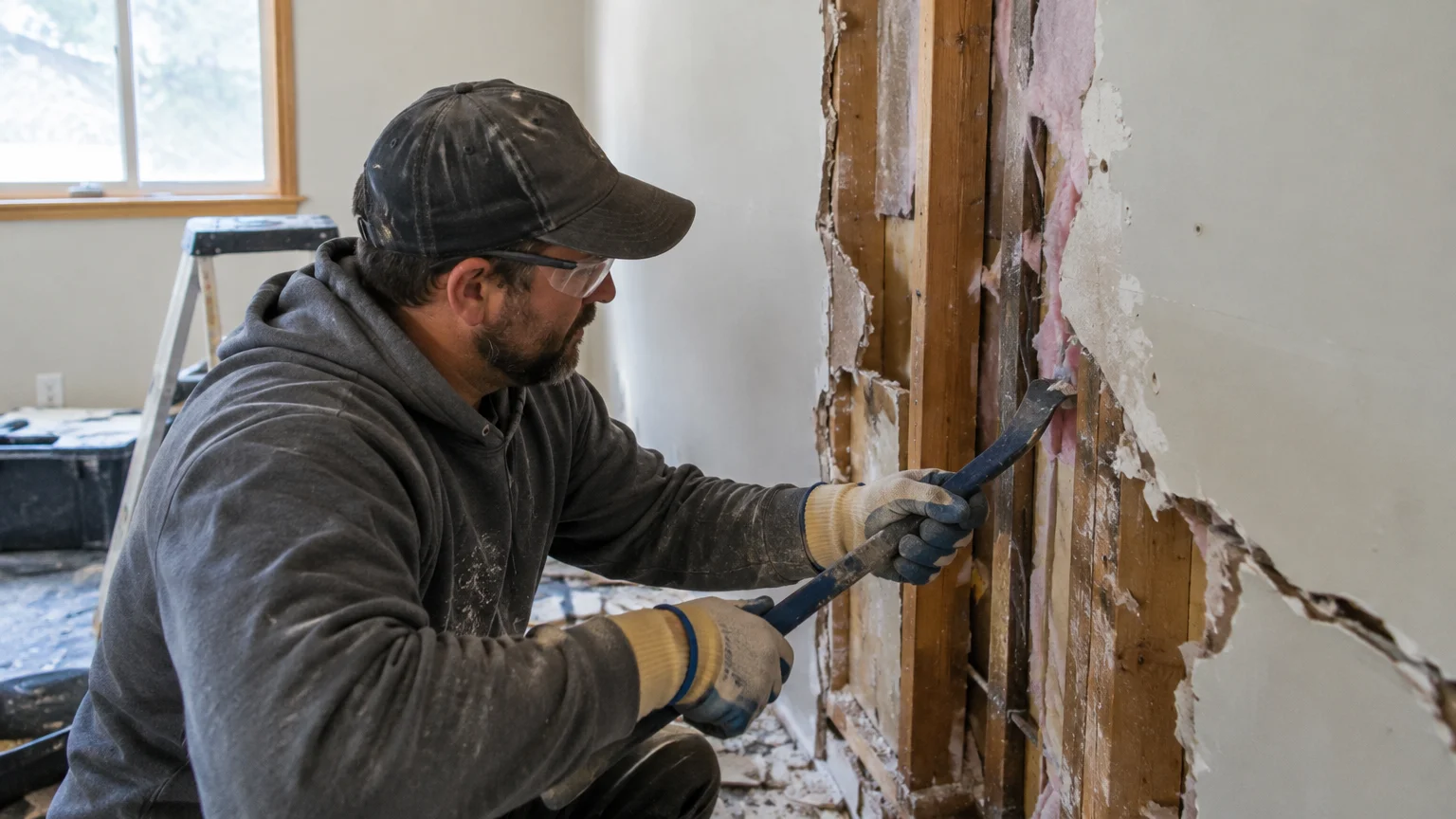
The cleanest method is to remove drywall in small, controlled sections. Start at an exposed edge, work from top to bottom, and put each piece into a lined container as it comes down.
Work in manageable sections from top to bottom
Score the paper along seams and corners. Remove fasteners before pulling panels when practical. Smaller pieces are easier to carry and less likely to hit floors, fixtures, or workers.
Keep one person focused on removal and another on carrying debris when the job allows. Never stand below a ceiling panel that may fall. Use proper access equipment instead of chairs or makeshift platforms.
Stop when the wall behaves in an unexpected way. Hidden fasteners, heavy plaster, damaged framing, or movement above the work area may show a larger issue. A contractor should check structural concerns before work continues.
Separate damaged materials and keep debris contained
Put drywall pieces into strong bags, bins, or a marked pile on protective covering. Do not fill bags until they are hard to lift. Heavy pieces can split bags and hurt workers.
Keep clean drywall apart from wood, metal, cardboard, insulation, and general trash when local rules or a hauler require it. Keep wet or moldy materials away from clean debris.
Clean as work moves forward. Pick up screws and sharp fragments before they spread. A tidy work zone makes final construction debris removal much easier.
How do you handle drywall debris after the removal is complete?
Review the debris before choosing a disposal plan. The amount, weight, material mix, access, and local rules all affect how it should leave the property.
Estimate the debris volume and choose a disposal method
Count the bags, piles, or wall sections. Include ceiling material, plaster, insulation, wood, fasteners, and other tear-out waste. Uneven pieces may take more space than expected.
An owner may use an approved disposal site, a construction waste container, or a professional hauling service. The right choice depends on the project size and materials. Some sites have separate rules for drywall, plaster, paint, or mixed waste.
A cleanout service removes unwanted materials and carries them away for proper handling. This can help after a remodel, rental turnover, office change, or damaged-wall repair. It may also support foreclosure cleanouts when a property needs fast preparation.
Prepare large, heavy, or mixed renovation waste for hauling
Keep debris away from gates, narrow paths, and parked cars. Leave a clear route from the work area to the pickup point. Tell the hauler about stairs, long carries, tight access, or items that cannot move safely.
Separate bulky items such as doors, cabinets, wood framing, appliances, and fixtures when possible. Old appliances may need special handling because they can contain refrigerants, oils, or electrical parts. A qualified provider can explain the right process.
The same planning helps with other renovation waste, such as a hot tub, concrete, or tree branches. Disposal rules differ by material. Do not assume everything belongs in one container.
When should you hire a professional drywall removal service?
A professional drywall removal service can help when the job is large, dusty, heavy, hard to reach, or likely to involve hazards. Homeowners do not always need a professional for light preparation or simple cleanup. Unsafe materials and hidden utilities need trained help.
Recognize projects that require specialized handling
Consider professional help when the project includes suspected asbestos, lead, mold, sewage damage, major water damage, high ceilings, structural walls, or large commercial rooms. These conditions can create health, safety, and disposal problems.
Professional help may also make sense when workers lack time, tools, safe lifting ability, or a way to move debris. Contractors often use junk removal companies to keep job sites clear while crews handle the remodel.
A full-service hauling company may sort, lift, load, and move construction debris. The owner should explain the materials, access, and work status before scheduling service. Clear details help the crew plan a safer collection.
Prepare the site for an efficient construction debris collection
Finish active tear-out before collection when it is safe. Bag loose drywall, stack larger pieces neatly, and keep hazardous materials apart. Do not mix unknown materials with ordinary renovation waste.
Clear the route from the debris to the loading area. Protect surfaces that should not be damaged. Keep pets, children, customers, and unrelated workers away from the loading zone.
Yakima WA Junk Removal serves property owners and contractors who need organized drywall and renovation debris removal in the main Yakima area, including Downtown Yakima, Terrace Heights, Union Gap, Selah, Wapato, Moxee, and nearby communities. The Contact us page explains how to arrange construction debris collection after the site is ready.
Frequently Asked Questions
Can a homeowner remove drywall without hiring a professional?
A homeowner may remove small areas of ordinary drywall when no hazards or hidden utilities are present. The work still needs dust control, safety gear, and careful debris handling. A professional should check older materials, mold, structural walls, high ceilings, and areas near wiring or plumbing.
How can someone reduce dust during drywall removal?
Seal doorways, cover vents, protect floors, and remove small sections. Keep the heating or cooling system off when suitable. Clean as work continues, and use a fine-dust vacuum when possible. These steps help stop sweeping from spreading dust.
What happens to old drywall after removal?
Old drywall may go to an approved construction waste site, recycling program, or other permitted location. Rules vary by place and material condition. Wet, moldy, painted, or mixed debris may need separate handling.
Can drywall be mixed with other remodeling debris?
Drywall can sometimes move with other construction debris, but separation is often better. Wood, metal, cardboard, insulation, concrete, and household trash may follow different rules. Keeping materials apart also helps a hauler sort the load.
When should someone schedule debris hauling?
Hauling can be arranged after the work area is safe and loose debris is contained. Earlier pickup may help when debris blocks a walkway or creates a safety problem. Share the material type, amount, access details, and any suspected hazards.
Do retail removal and other cleanouts need the same planning?
Retail removal projects often include shelves, displays, boxes, fixtures, and drywall. They may need a clear route and careful sorting. The same basic steps used for home cleanouts can help protect floors and keep customers away from work areas.
Key Takeaways
- Plan the work area first and mark every surface and material that will come out.
- Protect clean rooms by sealing doors, vents, floors, fixtures, and nearby finishes.
- Check for hazards such as wiring, plumbing, mold, asbestos, lead, and water damage.
- Remove drywall in small sections and contain debris as soon as it falls.
- Use professional help for large, heavy, difficult, or hazardous tear-out projects.
Conclusion
Good preparation keeps drywall removal safer and easier to clean. A clear work zone, sealed openings, careful checks, and small tear-out sections can prevent common problems. Proper sorting also helps construction debris hauling run more smoothly.
For projects Yakima WA Junk Removal can help plan the next step after drywall, plaster, and renovation materials are ready for removal. The business also helps property owners review related cleanouts and removal needs.
If you are unsure about the material or the best way to move it, pause before work grows. Contact us today to arrange the next step.